


If you’re Filipino and have ever taken an Ancestry DNA test, you might expect clarity about your roots.
What you get instead is something more complicated.
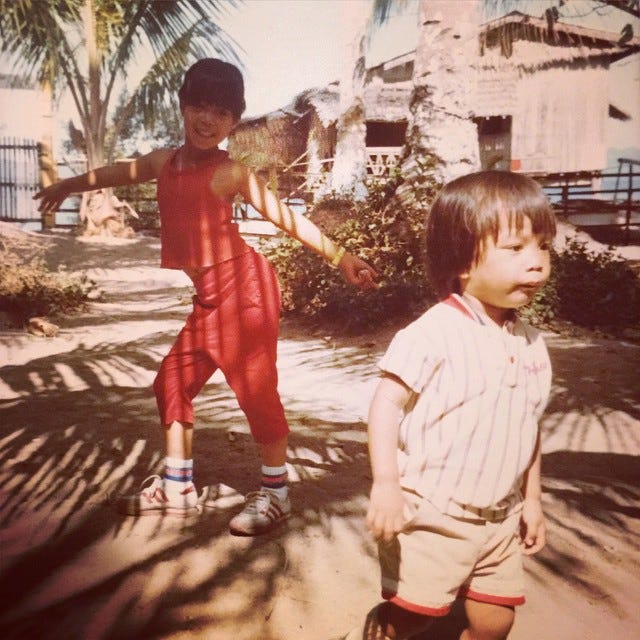
My first visit to the Philippines.
For Christmas, I got the whole family Ancestry DNA tests. We finally got around to collecting our laway in the little tube, which was gross, but we did it for science, and shipped them off to be extracted and analyzed. My results came in this morning, and I gotta say, it was a little anticlimactic.
I never doubted that I am Filipino. I guess I just didn’t realize that my genetic makeup would be so concentrated in the area where my parents grew up.
Growing up, I always envied families whose family trees stretched and branched across continents, with oddball forks accompanied by whispered tales and family gossip. Plot twist, there was another family. A secret baby. Don’t get me wrong, we have that in the Philippines too, but those stories are passed down by word of mouth, from an auntie or town gossip. Hard to know what’s true because, again, they’re not documented.
I’ve always wanted to know exactly where I came from and trace my family’s origin story. But Filipino history does not sit neatly in databases. The records that exist are often kept locally, in parish ledgers, baptismal records, marriage records, death records, handwritten and scattered. And what did survive on paper was vulnerable to war, bureaucracy, neglect, and colonial priorities.
What Ancestry Told Me
Well, I now have my Ancestry results, and here’s what it’s saying: Northern and Central Philippines, 84 percent. Luzon, 13 percent. Central and Southern Philippines, 2 percent. China and Taiwan, 1 percent.
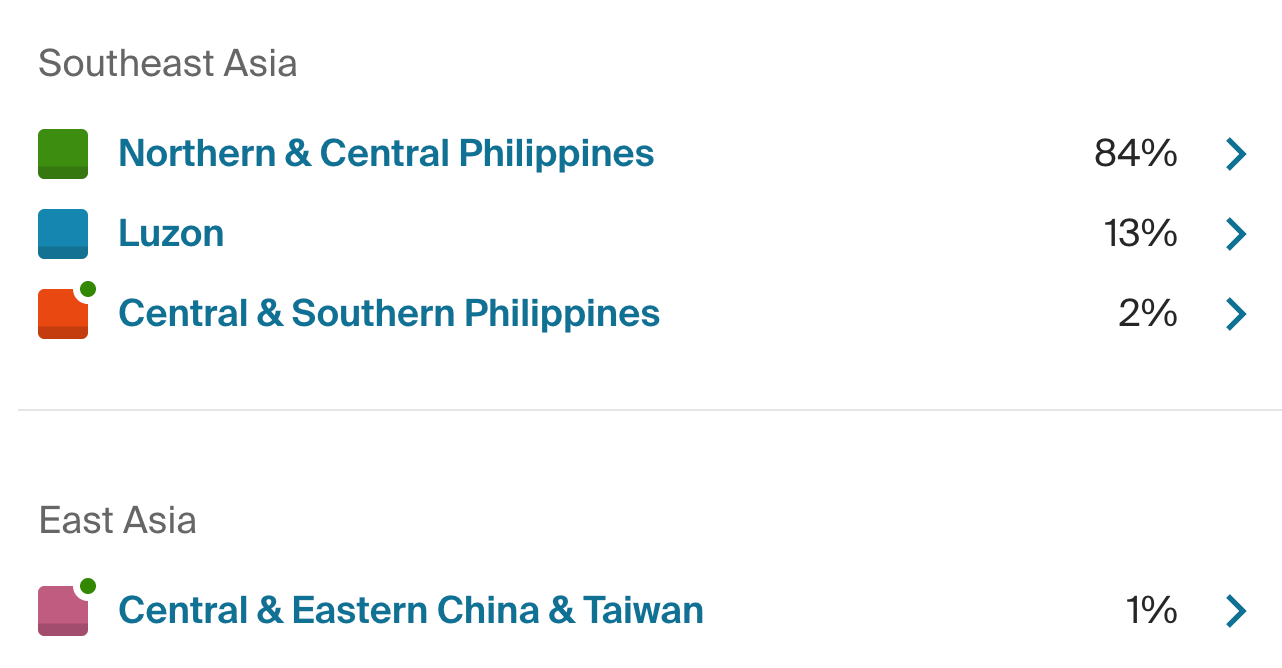
In other words, I am overwhelmingly Filipino, specifically from Luzon.
What GEDMatch Told Me
I didn’t stop there. Most DNA tests still aren’t very good at breaking down Filipino ancestry and telling you where you came from with any real specificity. So I took my raw DNA data and uploaded it into GEDMatch, hoping its models could break things down further.
At the end of the day, though, I didn’t upload my data to GEDMatch to find relatives. I wanted to know if I had any indigenous ancestry that could be traced back to the Cordilleras or to the Aetas.
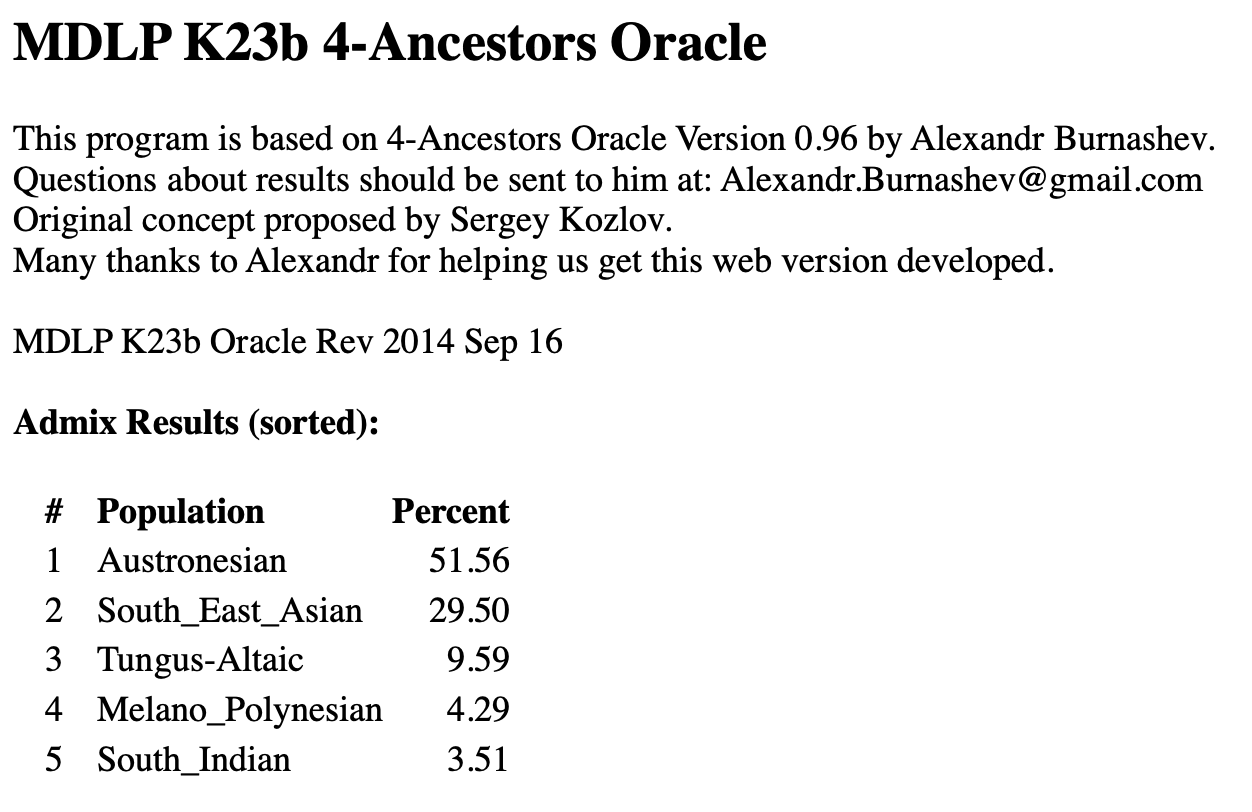
What was most illuminating across the models I used was how consistent the data was. Over and over again, it told the same basic story: Austronesian dominant, Southeast Asian at the core, East Asian present but secondary. The more granular detail showed traces of South Asian and Oceanian ancestry, but nothing that pointed to recent history.
I’d be lying if I said I wasn’t a little disappointed. And I’ve been trying to process why I felt bummed out by the results. Maybe it’s the Leo in me looking for something dramatic. But honestly, I think it’s also my colonized brain looking for threads of Cordilleran mountain people, Spanish grandees, or Chinese pirates.
My DNA does not show strong markers for recent Northern Luzon highland ancestry or the kind of Oceanic and Melanesian patterns that would suggest recent Aeta ancestry. That doesn’t mean those histories aren’t there. It more likely means that if they are, they go back farther than these tests can meaningfully detect.
The truest insight from my DNA is that despite the waves of change, from precolonial times through Spanish and American colonization, my ancestors persisted. And the family I still have in the Philippines is still there today, in Calabarzon, Manila, and Batangas.
But What About My Ancestors
My paternal grandmother’s last name was Borruel. Growing up, there were always stories. Maybe some Spanish or Portuguese sailor. Once, I heard that the sailor was Irish, some version of Borrell who made his way into our family line.
The easy explanation would be that Borruel came from the Clavería decree in 1849, where it was assigned to my family from a colonial catalog.
But Borruel does not appear in the catalog of names.
We know from my results that I have little to no detectable European ancestry. What likely happened is that my family was using the name Borruel even before 1849.
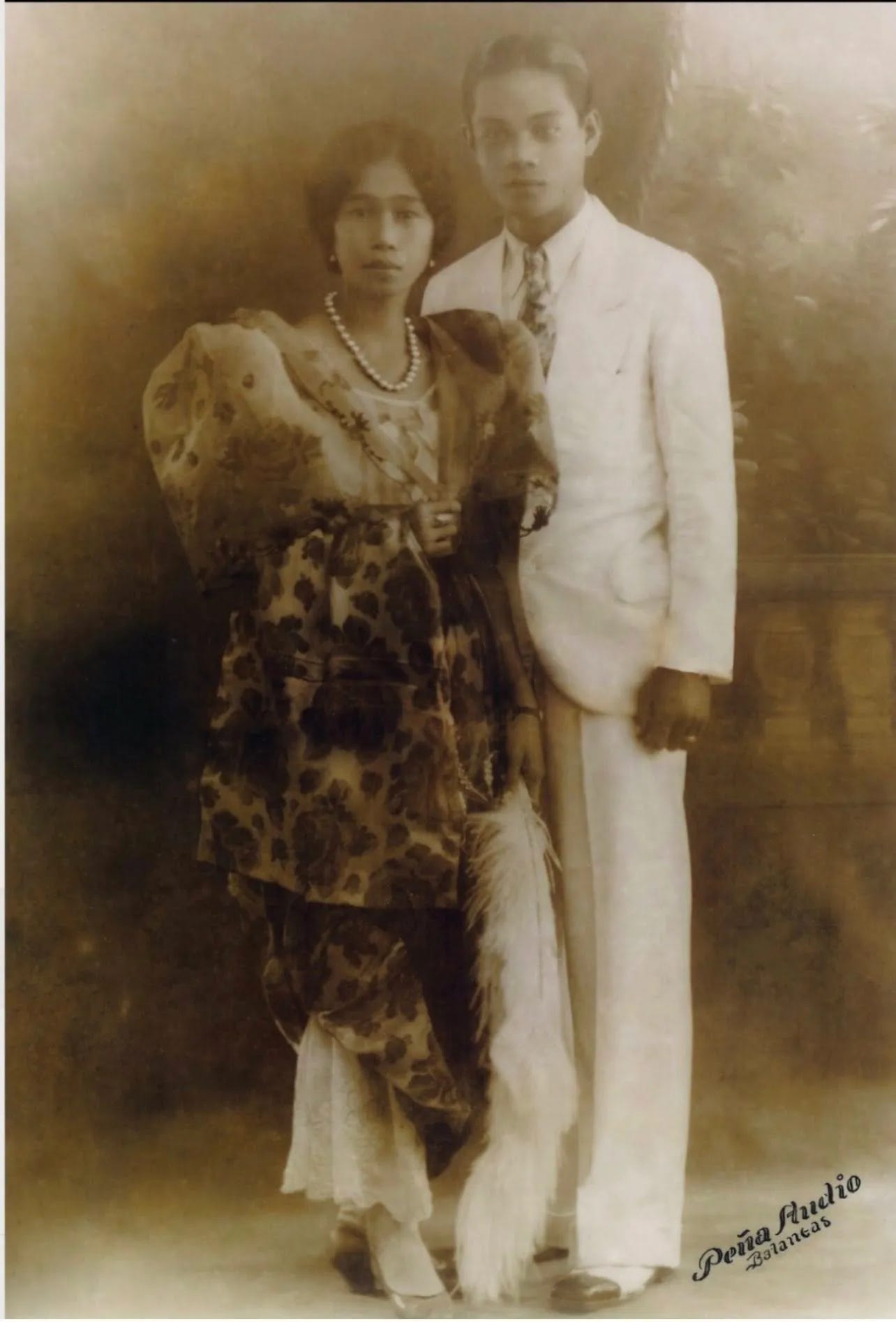
On my mother’s side, the name Malabanan tells a different story. It is distinctly Filipino and largely associated with Batangas. If Borruel reflects how colonial systems moved through our naming, Malabanan reflects local consistency.
The 1% East Asian ancestry also had me wondering about my paternal Lola’s relative who was supposedly Japanese. There was a story of someone who had been kicked out of the Philippines and ended up in Japan. He ended up marrying the woman and she’s the reason we have family members who look Japanese. I had hoped the DNA might confirm this, but the little East Asian component in my results is broad and regional. It does not point to a specific recent Japanese ancestor. So that story remains where it has always been – carried forward as a tale before bedtime, a memory, but not quite proof.
Now We Wait
We’re waiting eagerly for Brian’s results, and I suspect his will tell a different kind of story. His mixed heritage, from his Filipina mom and his upstate New York dad, should have our family tree extending across oceans in a way mine didn’t. And then there are the kids’ results, which will likely reflect both the constancy of mine and the diversity of their father’s.
In the end, DNA tests offer signals, probabilities, fragments, and clues. Mine confirmed what my family history had already been saying, even when the records could not.
Whether my results were concentrated or fragmented, neat or messy, expected or surprising, I am still overwhelmingly, unmistakably, Filipino. And I didn’t need a test to know that.
Writing this made me think about how much of our culture lives in what we pass down—stories, names, and even flavors. That’s the heart of Dear Flor. Right now, everything is 40% off for a limited time.
If you’ve been meaning to try Filipino flavors like Ube Boba or Buko Pandan, this is the moment.